
About Scott
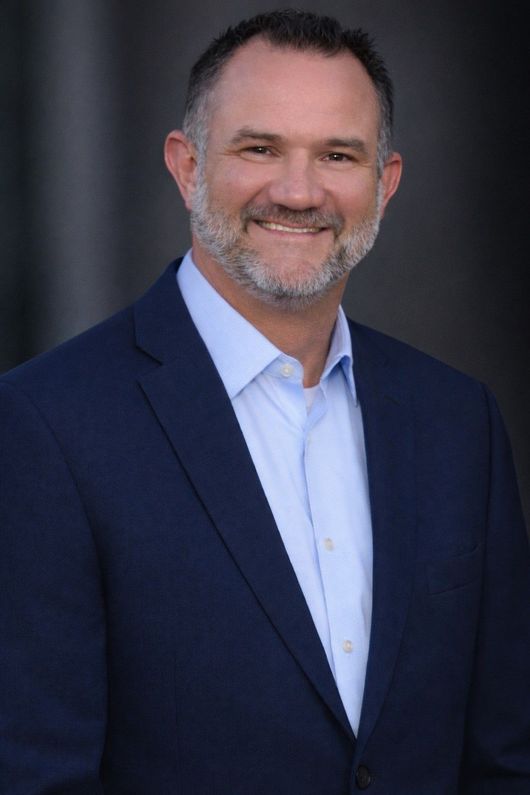
Scott Gilbert is a lifelong conservative with the right experience and unique qualifications to serve as our next Circuit Court Judge for Madison and Rankin counties. His values are rooted in a strong faith and dedication to family—and protecting our Constitutional freedoms and the rule of law.
Prior to attending law school and starting a distinguished career as an attorney, Scott served as a firefighter and police officer. That experience as a first responder and law enforcement officer gives him an insight and passion for protecting law and order to make sure our communities are safe places to live, work and raise a family. Scott and his wife, Caroline, have two children, Garrett and Anna Claire, and they are active members of Brandon Baptist Church and the community.
As an attorney, Scott is a litigator that specializes in complex litigation in state and federal courts. He worked as an Assistant United States Attorney for 10 years before joining Watkins & Eager in 2016. Scott has tried more than 30 cases and successfully handled numerous appeals in various state and federal courts. In addition to litigation, Scott also represents health care entities as outside general counsel. Scott’s clients include ambulance services, health care providers, not-for-profits, pharmaceutical distributors and pharmacies.
Scott has also continued to support law enforcement through his private practice. He represents law enforcement officers in civil litigation. He also represents officers during use of force incident investigations, often at no cost to the officer. Scott is a panel attorney for the Police Benevolence Association. Scott also worked as an intern at the Rankin and Madison District Attorney’s Office while he was in law school.
Scott has extensive experience prosecuting and defending criminal cases and litigating civil cases in federal and state courts throughout the United States. Admitted to the Mississippi Bar in 2006, and the Texas Bar in 2017, Scott’s private practice includes internal corporate investigations, white-collar criminal defense, complex civil litigation, administrative proceedings before state and federal regulatory boards, such as the Drug Enforcement Agency and the State Nursing Board, appellate litigation, criminal and civil healthcare litigation, False Claims Act litigation, and asset forfeiture litigation.
While with the Department of Justice (DOJ), Scott was a frequent lecturer at the DOJ training facility in Columbia, South Carolina. Scott also spent time at "Main Justice" in Washington, D.C. managing the Asset Forfeiture and Money Laundering program for the 94 United States Attorney's offices. Scott is an adjunct professor at Mississippi College School of Law, where he has taught various trial and criminal law practice classes. He has also lectured in other venues on health care fraud, such as Mississippi State University, at various health law symposia, and at Mississippi Bar approved CLE.
Scott was lead trial counsel in his very first felony jury trial in Rankin County Circuit Court while he was a third year law student. That case, State of Mississippi v. James Vardaman, involved a violent habitual offender who had been charged with conspiracy to manufacture methamphetamine. At trial, Vardaman was convicted by a jury and was sentenced to life without parole.
Education:
- Juris Doctor: Mississippi College School of Law, magna cum laude, 2006
- Bachelor's Degree: Bachelor of Arts, Mississippi State University, magna cum laude, 2003
- Graduate of Mississippi State Fire Academy, March 19, 1995
- Certified Mississippi Part-Time Law Enforcement Officer, May 2003
- Nationally Registered Emergency Medical Technician, February 25, 1995 & July 23, 2025
Honors & Recognitions:
- National Health Care Anti-Fraud Association, 2013 Investigation of the Year Award
- AV Preeminent Peer Review Rated by Martindale-Hubbell
- The Best Lawyers in America (2021-26, Criminal Defense: General Practice; Litigation - Health Care; Qui Tam Law)
- The Best Lawyers in America – Lawyer of the Year (2026, Qui Tam Law; 2022-23, Criminal Defense: General Practice)
- United States Department of Health and Human Services Inspector General's Integrity Award, 2010
Legal/Professional Memberships:
- Admitted to practice before the United States Supreme Court
- Bar Association of The Fifth Federal Circuit
- Federal Bar Association
- Rankin County Bar Association
- State Bar of Texas
- The Mississippi Bar
- Charles Clark Inns of Court
Experience at the U.S. Department of Justice
Scott was sworn in as a federal prosecutor in the Southern District of Mississippi in November 2006. As a federal prosecutor, Scott prosecuted a wide variety of criminal cases. He began his career prosecuting fraud involving Hurricane Katrina relief funds. During his 10-year stint at DOJ, Scott prosecuted murderers, child rapists, drug dealers, money launderers and fraudsters. A few of Scott’s more notable cases were:
United States v. Marco Rogers
Marco Rogers lived in Atlanta, Georgia. Rogers trafficked an eight-year-old girl from Memphis, Tennessee to Jackson, Mississippi by convincing a man he met on an adult website to bring his niece to Rogers. Rogers drugged and raped the child in a local motel while his accomplice made a video recording of the attack. The child was returned home to her family, who were not aware of the rape. When the accomplice later shared the video with an acquaintance in Massachusetts, he was apprehended. Because the accomplice had met Rogers through an adult website, he did not know Rogers real identity.
The investigation to identify and locate Rogers was tedious. It involved significant time and effort to trace Rogers’ electronic communications to a particular part of the Atlanta area. Once his location was narrowed down, Rogers was identified and located by placing him at particular locations over time by locating traffic and parking citations he had received. Ultimately, it was a very distinct scar on Rogers’ right leg that was used to positively identify him as the man in the video during the trial. Rogers was convicted by a jury.
United States v. Meera Sachdeva
Dr. Meera Sachdeva was an oncologist in McComb. In an effort to save money, Sachdeva directed her staff to reuse medical supplies that were used to give chemotherapy treatments to cancer patients. Sachdeva was initially discovered because the reuse of the supplies caused the outbreak of a rare infection among her patients. A deeper investigation uncovered that Sachdeva was treating some of her patients with expired chemotherapy medications. Sachdeva was sentenced to 20 years in prison.
United States v. One 1973 Chevy Caprice Classic
This is the only known civil forfeiture case to have gone to trial in federal court in the Southern District of Mississippi. The 1973 Chevy Caprice was valued at nearly $100,000.00. It was owned by a drug trafficker from Memphis. The Caprice had been outfitted with real wood flooring, ostrich leather seats, and a flat screen tv that would extend out of the trunk. The Memphis drug trafficker lent the car to a local drug dealer in the Jackson area to help the dealer build his drug distribution operation. When the local dealer was arrested by the DEA, the Caprice was seized. A “straw man” filed a claim to the Caprice, claiming to be its true owner. After a trial, the car was determined to have facilitated a drug trafficking crime and was ordered to be forfeited to the United States.
United States v. William “Butch” Dixon
The case against Butch Dixon was the largest criminal bankruptcy fraud case ever brought in Mississippi. Dixon was a businessman and financier. During a business dispute, Dixon placed a company he owned into bankruptcy. Shortly afterward, Dixon left the country, taking $9 million from the bankruptcy account with him to Costa Rica. Dixon was safely out of reach of extradition to the United States while he was in Costa Rica. After he was indicted, we learned that Dixon had flown to Panama to meet with a business associate. Dixon, intending to return to Costa Rica, was met by Panamanian authorities when he arrived at the airport. Apparently, the Panamanian army had been tipped off about Dixon and his flight schedule. Shortly thereafter, the Panamanian government notified the FBI that Dixon was onboard a plane bound for Miami, Florida. The FBI arrested Dixon at the airport in Miami when his flight landed. Dixon was sentenced to 57 months in prison.
United States v. Theddis Marcel Pearson and Telandra Gail Jones
Theddis Marcel Pearson and Telandra Gail Jones concocted a health care fraud scheme with over $18 million dollars for fraudulent physical therapy claims paid by Medicare. Pearson and Jones hired recruiters to find elderly people in the local community that were Medicare beneficiaries. Offering free massages and exercises, the recruiters would obtain the Medicare numbers of their elderly victims. Once identified, the patient information was provided to doctors who would prescribe “physical medicine” treatments. The “physical medicine” treatments were provided by people who, at most, had kinesiology degrees, and in many cases by people who had no medical background or training at all. The “physical medicine” services were billed to Medicare as if a licensed physical therapist had provided the treatment. The scheme involved submitting claims for more than 24 hours’ worth of therapy services per patient, per day. Pearson and Jones were convicted at trial and were each sentenced to 10 years in prison.
United States v. Joshua Martin
Joshua Martin was a gang member from Jackson, Mississippi. Martin was arrested for throwing a Molotov cocktail into an occupied home. Martin was released on bond, over our objection, and placed on home confinement while he awaited trial. When Martin was released, he never went home. Instead, Martin and another man murdered someone in a Jackson neighborhood the night after he was released. In this case, we were able to use a unique technology that had been deployed in Jackson known as “Shot Spotter.” Directional microphones had been installed on cell towers throughout the Jackson area. These microphones were equipped to detect gunfire and to triangulate the exact location where the gunfire occurred. By using the Shot Spotter technology we were able to determine the exact time the murder occurred. Using cell phone data, we were able to place Martin at the scene of the shooting at the same time. Martin was convicted and sentenced to 336 months in prison.
Experience in Private Practice
Scott left the U.S. Attorney’s Office and joined Mississippi’s oldest law firm, Watkins & Eager, PLLC in April 2016. While in private practice Scott has developed a broad base of experience.
Building on his experience in health care related work while with DOJ, Scott represents a variety of health care related businesses. Scott provides legal guidance on health care regulatory matters, employment issues, liability and policy matters, contracts and business negotiations. Scott’s clients include doctors, health care providers, not-for-profits, ambulance services, pharmacists, and independent pharmaceutical distributors.
Scott has continued to support law enforcement while in private practice. Scott is a panel attorney for the Police Benevolence Association (“PBA”). The PBA provides legal representation to its member police officers at no cost. Over the last ten years, Scott has responded to many officer-involved shootings and other use of force incidents to provide representation to police officers during these critical times.
Scott has also continued to practice criminal law in private practice. Scott handles criminal cases in state and federal courts. While Scott’s practice focuses on white collar criminal work, he also accepts certain appointments to represent the indigent and does pro bono work in select cases.
Join Our Mailing List
We will get back to you as soon as possible.
Please try again later.
By providing your phone number, you are consenting to receive text message updates, including automated text messages, and/or donation solicitations, to that number from the Committee to Elect Scott Gilbert. Message & Data rates may apply, and message frequency may vary over time. Reply "STOP" to opt out of these text message updates. Reply HELP for help.